
Feeling unfulfilled after career success is one of the most common yet least talked-about experiences among high achievers, founders, and executives.
That gap between knowing you should feel good and simply not feeling it is confusing, even frightening.
This article will cover why success can feel emotionally empty, how to tell whether the issue is burnout, misalignment, or an identity shift, and what to do next without making a rushed career change.
Written from Full Volume Partners’ direct experience helping founders, executives, and growth-stage leaders navigate the distance between external success and internal fulfillment.
| What Most People Expect | What Often Happens Instead |
| Temporary satisfaction becomes lasting fulfillment | The emotional high fades quickly |
| External success creates internal alignment | Achievement and meaning stay disconnected |
Why Career Success Can Still Feel Empty
We build our lives around milestones. A title, a revenue number, a business that finally works, and we tell ourselves that once we get there, things will feel different.
For most high achievers, feeling unhappy after achieving goals is not a character flaw, but it is more of a psychological pattern with a clear name.
| What People Expect Success to Feel Like | What It Often Feels Like in Reality |
| Lasting pride and relief | A brief high, then flatness |
| Renewed energy and motivation | Confusion about what comes next |
| A clear sense of arrival | A quiet “now what?” |
Arrival Fallacy
The arrival fallacy is the belief that reaching a milestone will finally bring lasting happiness.
Research on hedonic adaptation, including a landmark study by Brickman and colleagues, confirmed that even lottery winners gradually return to their emotional baseline over time.
The brain adapts. What once felt extraordinary becomes ordinary fast.
For high achievers, this is especially disorienting, as that goal that held so much emotional weight quickly becomes the new normal, and the mind starts scanning for the next target.
Why the Emotional High Fades So Quickly
A clear explanation is given by neuroscience. During goal-seeking, our dopamine peaks. The pursuit is the reward, because the brain is activated by progress, uncertainty, and anticipation.
When you already hit a milestone, your brain quickly focuses on a new baseline, which makes what once felt significant become normal almost immediately.
This is the hedonic treadmill in action. You keep running, but the emotional ground doesn’t really move.
The 3 Most Common Reasons People Feel Unfulfilled After Success
Not everyone experiencing feeling unfulfilled after career success is dealing with the same root problem. Identifying the real cause matters because the solution is completely different for each one.
| Cause | What It Feels Like | What Usually Triggers It |
| Burnout | Exhausted, numb, depleted | Sustained pressure and chronic overwork |
| Misalignment | Empty, resentful, detached | Chasing goals that were never truly yours |
| Identity lag | Lost, directionless, confused | Growing beyond the person who set the original goal |
- Burnout Looks Like Exhaustion, Not Just Boredom
Burnout is a state of deep energy depletion where even tasks you once genuinely enjoyed feel hollow.
In 2025, U.S. employee burnout hit an all-time high of 66%.
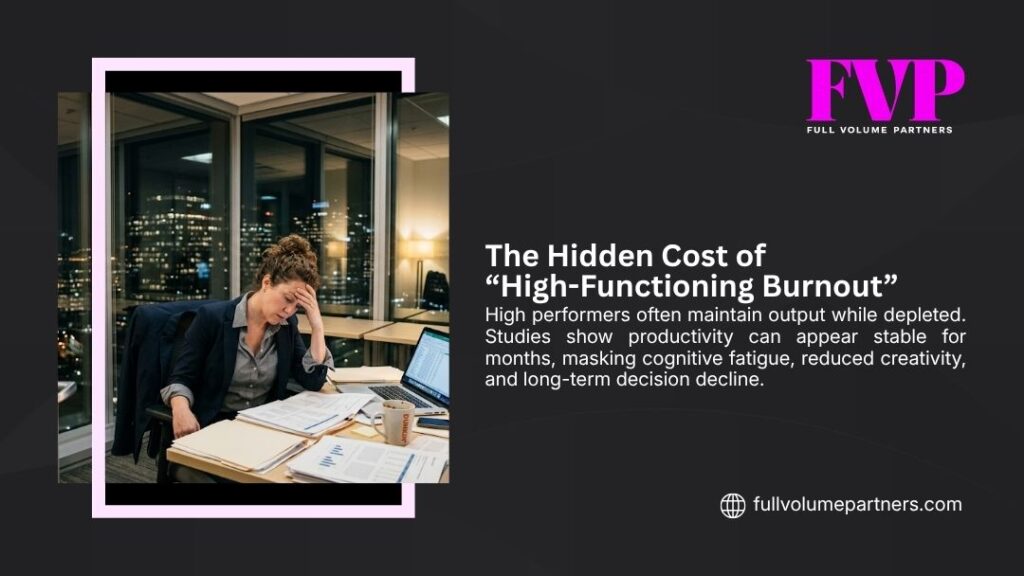
Performance and depletion can coexist for longer than most of us expect. If you have been feeling burned out even though successful, that recognition is the first real step forward.
- Misalignment Means the Goals Were Never Really Yours
Some of us achieve exactly what we were conditioned to want, then realize we never truly wanted it.
When a goal was never personally yours, reaching it doesn’t produce fulfillment. It produces confusion. And research confirms this.
Values misalignment costs businesses $322 billion globally in lost productivity and turnover each year. Studies also show that most professionals leave jobs specifically because they feel no sense of purpose.
- Identity Lag Happens When Your Old Ambition No Longer Fits
The person who set a goal five years ago is not always the same person living with that goal today.
Identity lag is when your ambition hasn’t caught up with who you’ve become. The drive that built your success may no longer be the drive that sustains it.

How to Tell Which Problem You Are Actually Dealing With
Before making any decisions, the most useful thing you can do is get honest about what you are actually experiencing.
| What You’re Feeling | Likely Cause | What It Usually Means | First Step |
| Flat and unmotivated | Burnout or identity lag | Depleted reserves or outgrown goals | Rest first, then reassess |
| Detached but still performing | High-functioning burnout | Deep depletion behind strong output | Name it, slow down |
| Resentful of your success | Misalignment | Goals were externally driven | Audit your actual values |
| “I don’t recognize myself” | Identity lag | You’ve outgrown your original goals | Rebuild from who you are now |
Signs It Is Burnout
| Burnout Sign | What It Looks Like |
| Emotional fatigue | Numbness toward work that once felt meaningful |
| Poor recovery | Sleep and rest don’t restore your energy |
| Reduced focus | Work takes twice as long with less output |
For a deeper look at how this pattern shows up in high performers, the signs of burnout in high-achieving women breaks it down across emotional, cognitive, and behavioral layers.
Signs It Is Misalignment
Misalignment feels less like exhaustion and more like detachment. Watch for these patterns:
- Feeling like you are checking boxes rather than building something that matters
- Resentment toward the work itself, not just the workload
- Struggling to explain why your work actually matters to you personally
- Chasing external recognition more than internal satisfaction
Signs It Is Identity Lag
Identity lag often sounds like this: “I got what I worked for, but I don’t feel like myself anymore.”
You haven’t lost your ambition. You have outgrown its original shape. The version of you that set those goals needed different things than the version of you living with them now. That is a signal, not a crisis.
What to Do Next Based on the Root Cause
| Root Cause | What to Stop | What to Do Next | Expected Result |
| Burnout | Making decisions while depleted | Rest, reduce load, then reassess | Restored energy and clarity |
| Misalignment | Pursuing goals that don’t reflect your values | Audit what you’re building and why | Renewed sense of direction |
| Identity lag | Forcing your current self into old ambitions | Redefine what success means now | A next chapter that actually fits |
If It Is Burnout, Recover Before You Reassess
The worst time to make a major career decision is while you’re depleted. When we humans are running on empty, everything looks broken, including the things that are actually fine. The sequence matters:
- Create space to stop performing, even briefly
- Reduce decisions and obligations where possible
- Only once energy returns, evaluate what actually needs to change
If It Is Misalignment, Audit Your Goals and Values
Start with one honest question: “Would I still want this if nobody could see it?”
| Your Goal | Why You Wanted It | Does It Still Fit? |
| The title | Status or internal growth? | Does it reflect who you are now? |
| The revenue target | Security or validation? | Is it tied to your actual values? |
| The business model | Passion or obligation? | Does it still energize you? |
Gallup research found that employees who feel their work aligns with their purpose are four times more likely to be engaged. Purpose is a measurable driver of performance, not just a philosophical idea.
If It Is Identity Lag, Rebuild Around Who You Are Now
You don’t need to abandon ambition. You need to update it.
The goal is to choose a next chapter that reflects your current values and the person you have actually become.

When Career Success Is Not the Real Problem
Sometimes the issue has nothing to do with the role, the company, or the income. The pattern repeats because its source is internal.
| Common Instinct | Why It Often Falls Short |
| Change jobs | The pattern follows you |
| Set a bigger goal | Achievement doesn’t close a meaning gap |
| Rethink your identity framework | This is where real change actually begins |
Why a Bigger Goal Does Not Always Fix the Problem
When feeling unfulfilled after career success becomes a repeating pattern, adding another milestone doesn’t reset it.
According to a study conducted by Gallup, only 30% of employees felt connected to their company’s mission, a record low. That reflects a large portion of the workforce achieving without feeling aligned with why they’re doing it.
When It May Be Time to Rethink Your Career Direction
There is a difference between a rough patch and a real signal. These signs point toward something worth taking seriously:
- Repeated disengagement across multiple roles or companies
- Persistent emptiness that rest and time off have not resolved
- A growing conflict between your values and your daily work
- A feeling that having lost sense of self after years of overachieving has quietly been building for longer than you want to admit
If the pattern keeps repeating, the answer is probably not in your next title.
Frequently Asked Questions
Why do I feel unfulfilled after achieving career success?
The emotional boost from reaching a goal is temporary. The brain adapts quickly to new conditions, which is why achievement rarely produces the lasting fulfillment most people expect from it.
Is this burnout or something deeper?
It can be both. Burnout depletes your energy. Deeper unfulfillment usually points to misalignment or identity shift. The two often show up at the same time.
Can you be successful and still feel empty?
Yes, external results don’t automatically create internal meaning, especially when the original goals were driven by outside expectations rather than personal values.
What is the difference between burnout and identity lag?
Burnout drains energy. Identity lag disconnects you from your sense of direction. One depletes you. The other makes you question whether the whole direction was ever truly right.
Should I change careers if I feel unfulfilled?
Not necessarily, and not yet. Identifying the root cause first prevents making major changes that don’t address the actual problem underneath.
You Built the Success. Now It’s Time to Build What Comes Next.
Full Volume Partners works directly with founders, executives, and high-achieving professionals who have built real results but feel disconnected from them.
The advisory work focuses on:
- Understanding why feeling unfulfilled after career success is showing up at this specific stage of your growth
- Rebuilding a definition of success that is personally aligned and actually sustainable
- Reconnecting ambition with real values so effort and fulfillment stop working against each other
If what you read here felt familiar, that recognition is worth acting on. Connect with Full Volume Partners and take the first step toward clarity and direction.
Key Takeaway
Feeling unfulfilled after career success is not a sign that something is wrong with you. It is a signal that something needs to change, whether that is your energy, your goals, or your sense of who you are becoming.
Identifying which problem you are actually dealing with is where the real path forward begins.

