
Corporate burnout in women over 40 is not a personal failing. It is among the most common and least discussed experiences in professional life.
According to McKinsey and LeanIn.org’s 2025 Women in the Workplace study, 60% of senior-level women report frequently feeling burned out, the highest level in five years.
With 55% of the U.S. workforce currently experiencing burnout, this is not an individual problem. It is a structural one.
This article covers what corporate burnout looks like for women over 40, why it peaks at this stage, how to tell it apart from menopause or normal stress, and what a realistic recovery path looks like without forcing a dramatic career exit.
What Is Corporate Burnout in Women Over 40?
Corporate burnout is not simply feeling tired after a long week. It is a state of chronic depletion across three recognized dimensions: emotional exhaustion, mental detachment from work, and a persistent drop in personal effectiveness.
| Dimension | What It Looks Like |
| Emotional exhaustion | Feeling drained by interactions that once felt energizing |
| Mental detachment | Going through the motions with no real investment |
| Reduced effectiveness | Taking twice as long to produce half the result |
For women in midlife, this experience compounds quickly. Career responsibility, unpaid caregiving, health changes, and years of accumulated pressure do not create one single problem. They create several at once.
Why Corporate Burnout Is Different From Everyday Stress
Stress usually improves when demands decrease. A workload drops, a project closes, recovery follows. Burnout does not follow that pattern. It persists even after rest, and sleep doesn’t fully restore it.
Many women spend months trying to recover using stress-management strategies that were never designed for burnout.
Why Women Over 40 Face Unique Burnout Risks
Burnout in women over 40 builds through pressures younger professionals rarely carry simultaneously: senior leadership responsibilities, caregiving demands, midlife health transitions, and a culture not built to support them through any of it.
Carrying more pressure with less structural support leads directly toward professional burnout in midlife women.
Can Corporate Burnout Affect High Performers More Than Others?
High performers are often the last people diagnosed with burnout, and the first to develop it. Perfectionism, strong output, and reluctance to ask for support means burnout in high-achieving women builds behind an intact performance record.
Being burned out and not knowing it is far more common in high-output professionals than most organizations recognize.
Common Signs of Corporate Burnout in Women Over 40
Many women do not recognize burnout until the body demands attention. The signs exist long before that point, easy to rationalize as hormones, stress, or a rough patch.
| Category | Symptoms |
| Emotional | Cynicism, irritability, detachment, loss of motivation |
| Physical | Fatigue, disrupted sleep, frequent illness, tension headaches |
| Cognitive | Poor focus, forgetfulness, slower processing |
| Career-related | Avoidance, reduced engagement, dread before the workday |
The signs of burnout in high-achieving women often appear together and get misread as something entirely different.
The emotional signs tend to emerge quietly. Irritability with colleagues whose behavior never bothered you before. Work that once felt meaningful now feels hollow.
Physical Symptoms That Often Go Ignored
- Waking up exhausted even after a full night of sleep
- Getting sick more frequently with no obvious cause
- Persistent tension headaches or jaw tightness
- Digestive issues that track closely with work pressure
These symptoms deserve serious attention, not dismissal.
Workplace Behaviors That Signal Burnout
- Avoiding meetings or calls that feel too demanding
- Procrastinating on tasks that once felt routine
- Pulling back from colleagues you previously worked well with
- Feeling like you are performing competence rather than genuinely feeling it
If feeling burned out even though successful sounds familiar, that contradiction is worth taking seriously rather than pushing through.
Why Corporate Burnout in Women Over 40 Happens More Often Than Many Realize
Burnout rarely comes from a single bad week. For women in midlife, it develops through years of accumulated pressure from multiple directions.
| Risk Factor | Why It Contributes | Workplace Example |
| Senior leadership responsibilities | More decisions, less recovery time | Managing teams while being managed upward |
| Unpaid caregiving | Energy spent outside work doesn’t regenerate | Caring for aging parents while holding a director role |
| Inflexible work culture | No space to recover between sustained demands | Expected availability outside working hours |
| Perimenopause or menopause | Symptoms overlap with burnout, compounding both | Sleep disruption affecting focus and resilience |
The Hidden Weight of Career and Leadership Responsibilities
The higher a woman climbs, the more invisible the pressure becomes. In the 2025 McKinsey and LeanIn.org study, among senior women with five years or fewer at their company, 70% reported frequent burnout and 81% expressed concern about job security.
Corporate burnout in women over 40 in leadership is not a soft issue. Limited structural support accelerates it fast.
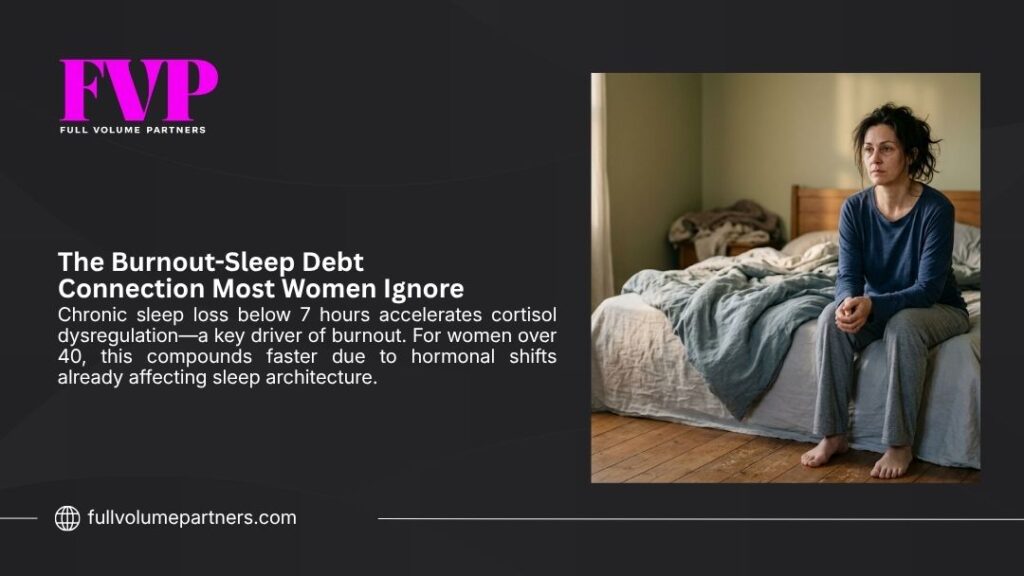
Caregiving, Family Demands, and the “Second Shift”
Three in five U.S. family caregivers are women, with the average caregiver aged 51. According to AARP’s Caregiving in the US 2025 report, 63 million Americans serve as family caregivers, and 70% are also employed. Nearly 70% report difficulty balancing career and care.
Family caregivers provide an estimated $600 billion in unpaid labor each year. Research from the McKinsey Health Institute found 37% of caregivers for adults experience high burnout symptoms including cognitive impairment and emotional exhaustion.
Burnout, Perimenopause, and Menopause: What Is the Connection?
Burnout and menopause share overlapping symptoms, which makes both harder to identify and address at the same time.
| Symptom | Burnout | Menopause | Can Occur in Both |
| Sleep disruption | Yes | Yes | Yes |
| Mood changes | Yes | Yes | Yes |
| Fatigue | Yes | Yes | Yes |
| Cognitive fog | Yes | Yes | Yes |
| Hot flashes | No | Yes | No |
A Mayo Clinic study of over 4,400 employed women found that 13.4% experienced an adverse work outcome tied to menopause symptoms, with an estimated $1.8 billion in annual U.S. economic loss from missed workdays.
Research in Women’s Health found that over 60% of perimenopausal women felt uninformed about menopause, even while experiencing its symptoms.
How to Recover From Corporate Burnout Without Making a Rash Career Decision
The goal is not to make major decisions while exhausted. Depleted reserves compound poor choices.
| Immediate Actions | Long-Term Changes |
| Reduce cognitive load where possible | Audit what you are actually committing to each week |
| Stop the most draining optional obligations | Restructure how work happens, not just when |
| Prioritize sleep above most recovery tactics | Address root causes, not just surface symptoms |
| Name honestly what is happening | Build structural boundaries that hold consistently |
What to Do During the First Few Weeks of Recovery
The first priority is stopping the depletion from accumulating further. That means reducing optional obligations, protecting sleep consistently, and separating what is genuinely urgent from what is familiar.
Research shows that moderate burnout, which many professional women over 40 navigate, takes three to six months and requires structural change alongside rest.
Setting Boundaries Without Damaging Your Career
Boundaries in professional environments are not ultimatums. They are clear communication about what sustainable performance actually requires.
- Blocking daily focus time protected except for genuine urgency
- Setting a consistent end to availability each evening and communicating it once
- Declining meetings that could have been an email
- Saying no to scope additions by naming your current capacity
None of these require confrontation. They require consistency.
When Professional Support Can Help
Therapy, executive coaching, HR conversations, and medical evaluation are all legitimate tools, and none signal weakness.
SHRM data (2025) shows that 34% of workers have accepted lower-paying positions and 22% have quit without another job to protect their mental health. When exhaustion affects basic daily function, a medical evaluation is the right first step.
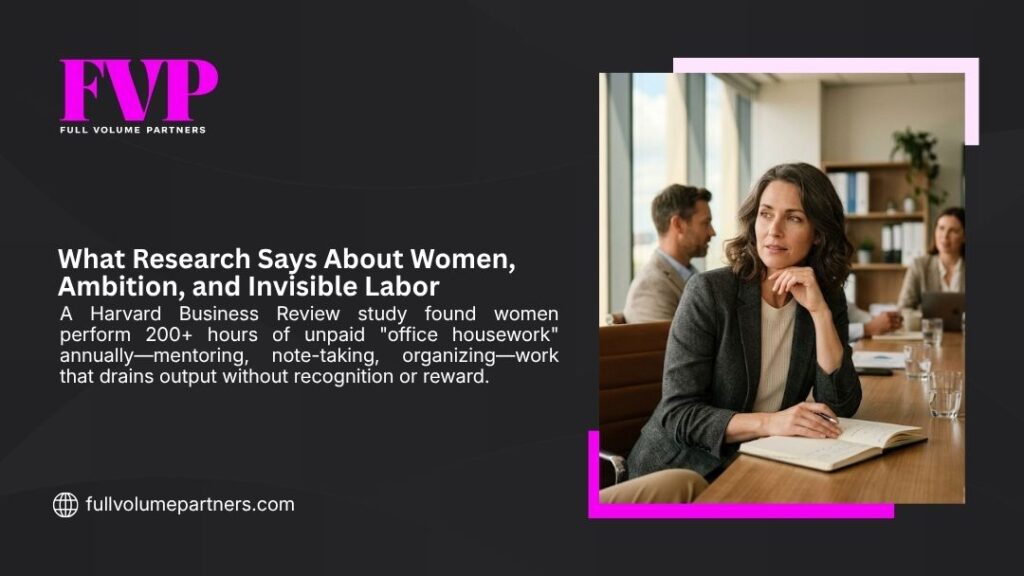
When Corporate Burnout Signals a Bigger Career Problem
Burnout sometimes signals something deeper: a mismatch between where you are and where you want to be. Feeling unfulfilled after career success is not always about workload. It is often about direction.
| Situation | Best Response | Key Indicators |
| Exhausted but still aligned | Recover and restructure | You can picture thriving in this role |
| Exhausted and misaligned | Renegotiate or transition | The role never truly fit, even before burnout |
| Aligned but structurally stuck | Renegotiate internally | Values fit, but conditions do not |
| Chronically dissatisfied across roles | Deeper career audit | The pattern repeats regardless of employer |
Signs Your Current Role May No Longer Fit
There is a real difference between burnout from a role you still want and burnout from one that never genuinely fits.
- Persistent disengagement that rest alone does not resolve
- Growing resentment toward the work itself, not just its volume
- Your values and the organization’s direction pulling steadily apart
- A sense of being successful but unhappy that has built across more than one role
Questions to Ask Before Quitting Your Job
These create more clarity than a decision made while depleted:
- Is what I am feeling burnout, or a mismatch I have been ignoring?
- Would different conditions in this role change how I feel about it?
- Is this temporary pressure or something structural and ongoing?
- Have I genuinely attempted recovery, or am I deciding while depleted?
- What am I moving toward, not just away from?
How Women Over 40 Successfully Pivot Their Careers
Career reassessment in midlife is increasingly common and deliberate. Over 60% of professionals aged 40 and above have considered a major career change, according to a LinkedIn Workforce survey.
The U.S. Bureau of Labor Statistics identifies ages 40 to 55 as a peak window for career transitions.
What separates sustainable pivots from reactive exits is clarity about who you are outside of your career. Leaving without that clarity tends to trade one form of exhaustion for another.
Corporate Burnout in Women Over 40: A Practical Action Plan
Recovery becomes more manageable when treated as a solvable problem, not a personal failure. This 30-day structure offers a starting point.
| Week | Focus Area | Key Action |
| Week 1 | Reduce and assess | Stop one draining obligation. Identify the top stressor. |
| Week 2 | Protect energy | Establish and hold a consistent sleep schedule. |
| Week 3 | Set first boundaries | Block daily focus time. Communicate availability clearly. |
| Week 4 | Evaluate and decide | From a steadier state, assess what actually needs to change. |
The First 7 Days
The first week is not about fixing anything. It is about stopping the habit of pushing through without a plan.
- Identify what drains the most energy and contributes the least
- Sleep at a consistent time for seven nights straight
- Say no to one optional commitment without over-explaining
- Write down what you are actually feeling, not just what you are managing
The First 30 Days
By month’s end, shift from surviving to assessing.
- You can name your primary stressors clearly
- You have tested at least one boundary at work
- Your basic energy is more stable than in week one
- You have not made a major career decision from a depleted state
Building a More Sustainable Career Going Forward
Long-term sustainability is about how work is structured, not how hard you push within it. Career burnout in women is more often structural than personal.
If persistent unfulfillment remains after recovery, that signal is worth exploring with the right support before drawing conclusions while depleted.
FAQs
Is corporate burnout more common in women over 40?
Yes. McKinsey and LeanIn.org’s 2025 study found that 60% of senior-level women report frequent burnout, the highest level in five years.
Women over 40 carry compounded pressures including leadership and caregiving demands that most workplace structures do not account for.
Can burnout go away without quitting my job?
Yes, though recovery requires more than rest alone. Moderate burnout typically takes three to six months when workload, boundaries, and support structures are genuinely addressed. Time off without structural change produces temporary relief, not lasting recovery.
How long does burnout recovery take?
Recovery ranges from a few weeks for mild burnout to a year or longer for severe cases. Most professional women dealing with corporate burnout in their 40s fall into the moderate range, where three to six months of deliberate structural change produces meaningful improvement.
Should I tell my manager I am burned out?
That depends on your organization’s culture and relationship with your manager. A practical starting point is naming the specific issue, whether that is capacity, workload, or need for flexibility, rather than the diagnosis itself.
You Don’t Have to Keep Running on Empty.
Full Volume Partners works directly with founders, executives, and high-achieving professionals who have built real careers but feel disconnected from how they work.
The advisory work focuses on:
- Identifying what drives corporate burnout in women over 40, and separating temporary pressure from structural misalignment
- Rebuilding a model that reflects what sustainable performance requires at this career stage
- Reconnecting your work and direction with the values and goals that actually drive you forward
If what you read here feels familiar, connect with Full Volume Partners and take the first step toward a clearer path forward.

Key Takeaway
Corporate burnout in women over 40 is not a phase that passes with a long weekend. It is a signal that something in the current structure needs to change, whether that is workload, boundaries, role fit, or the definition of success you have been building toward.

